
A Story of Recovery that Inspired President Clinton
By Chris Thrasher
CEO, CGI Overdose Response Network
Earlier this month, President Clinton was in Brooklyn for the groundbreaking of an expansion for Anchor House, a faith-based treatment center that has helped people battling addiction since 1967. Their new $18 million expansion, funded by the State of New York, will help Anchor House expand their capacity to 70 beds in their men’s facility.
Anchor House’s work saves lives. For five years, overdose deaths were on the rise in New York state, with 6,300 people dying in 2023 alone. But in 2024 and 2025, thanks to the work of Anchor House and other community organizations, overdose deaths have begun to drop significantly.
Behind these statistics are powerful stories. At the groundbreaking, a member of the Anchor House community named Sarah shared her recovery journey.
At the age of 19, Sarah saw pills flood into her community as the opioid epidemic took hold. She became addicted, and before long, physical withdrawal consumed her life. After being arrested, she hit a turning point in her life: instead of posting bail, she initially chose to stay in jail to get clean because she knew she could not keep living that way.
After making bail, Sarah entered the Anchor House treatment program. She arrived without faith or hope, but she was moved by the joy and compassion of the staff and volunteers, who poured love and support into her recovery. After completing the 18-month program, she still faced legal consequences, serving another six months in jail followed by five years of probation. Through it all, she learned that accountability matters and that lasting change takes time.
When she was released, Sarah returned to Anchor House and worked two part-time jobs while rebuilding her life. Motivated by her own experience, she pursued a career in public service, earned her Master of Social Work degree, and continues to seek new opportunities to serve and give back to her community.
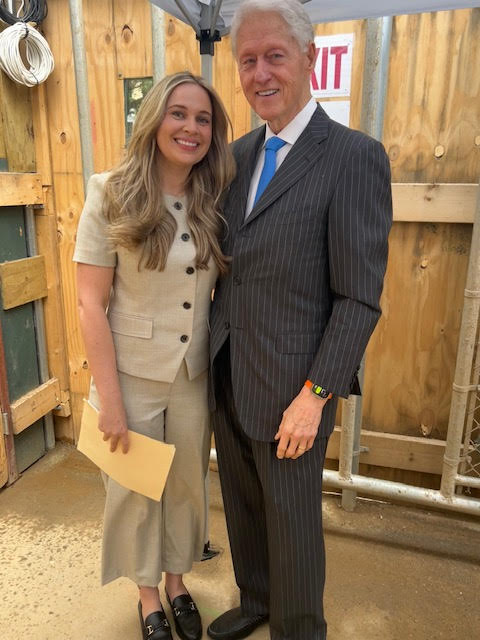
As President Clinton said last week at Anchor House, “This is a place of second chances.” We know that for people to get that second chance, we need to prevent deaths from overdose – and the most effective way to do that is with the lifesaving opioid overdose reversal drug naloxone.
For over 10 years, the Clinton Foundation has been fighting the overdose crisis by increasing access to lifesaving naloxone, reducing stigma and training community leaders to help people into recovery.
The Foundation’s Overdose Response Network has helped distribute over a million doses of naloxone to community groups, sober living homes, and public health departments through a partnership with Direct Relief; and has installed thousands of Overdose Aid Kits across the country.
Through the ORN’s Empowering Faith Leaders program, we have trained more than 350 faith leaders from across the country and across traditions to address substance use disorders in their communities using approaches that are supportive, compassionate, consistent with their traditions beliefs and values and informed by the best available public health science.
We’re beginning to turn the tide of the overdose crisis. I once heard that the word time is an acronym that stands for Things I Must Earn. To that end, the ORN recognizes that TIME takes time and it’s going to take sustained support of community groups like Anchor House all working together to help continue this progress, and make more recovery stories like Sarah’s possible.