
 post | September 20, 2019
Tangible action on climate change is achievable
A lot has happened since the 1990s — sea levels have risen, storms have intensified, and communities have been forced to grapple with the escalating effects of a changing climate. Today, young people, like 16-year-old activist Greta Thunberg, are leading the fight to save our planet.
President Clinton and his administration fought for the idea that there is no healthy economy without a healthy environment. He believed that a prosperous society should have the confidence and the means to protect its environment. That’s why the Clinton administration prioritized a commitment to finding solutions — proving that tangible action on climate change is achievable.
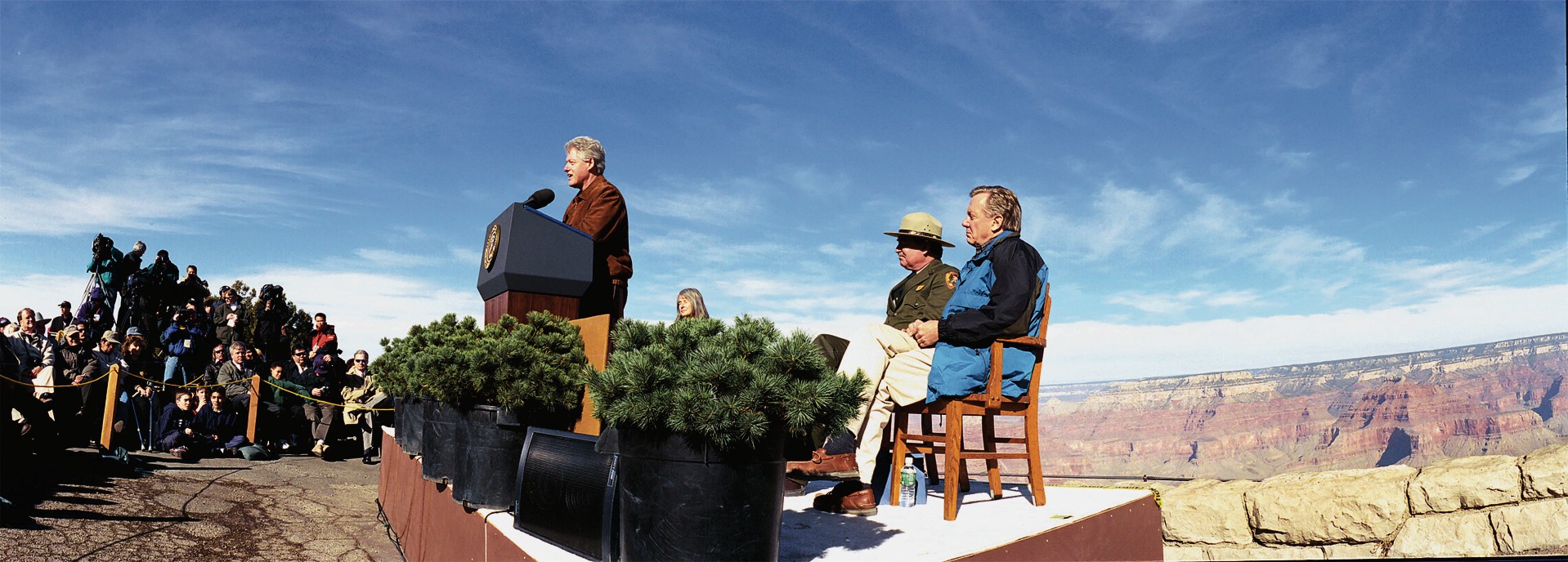
From preserving treasured corners of the United States — through the Yellowstone National Park, Governor’s Island in New York, or Buck Island Reef in the U.S. Virgin Islands — to the mobilization of the Kyoto Protocol — which called for reducing the emission of certain greenhouse gases and has since been adopted by 191 countries and the E.U. — the Clinton administration left behind a roadmap for protecting our environment and combating climate change that would affect generations to come.
Inspired by previous remarks from former Environmental Protection Agency administrator Carol Browner, take a look at six examples of progress that was made during the Clinton administration.
1. President Clinton gave the Environmental Protection Agency a seat at the Cabinet table.
President Clinton and Vice President Gore made bold strides to elevate and emphasize the work of the EPA, strengthening the agency as a critical voice in the Cabinet. Using presidential veto power, President Clinton made sure that the EPA had the resources and the authority to do its job effectively. Years later, in 2013, the EPA would dedicate its building to President Clinton — making it the William Jefferson Clinton EPA building.
2. The administration protected millions of acres of American forest, parks, wilderness, and more.
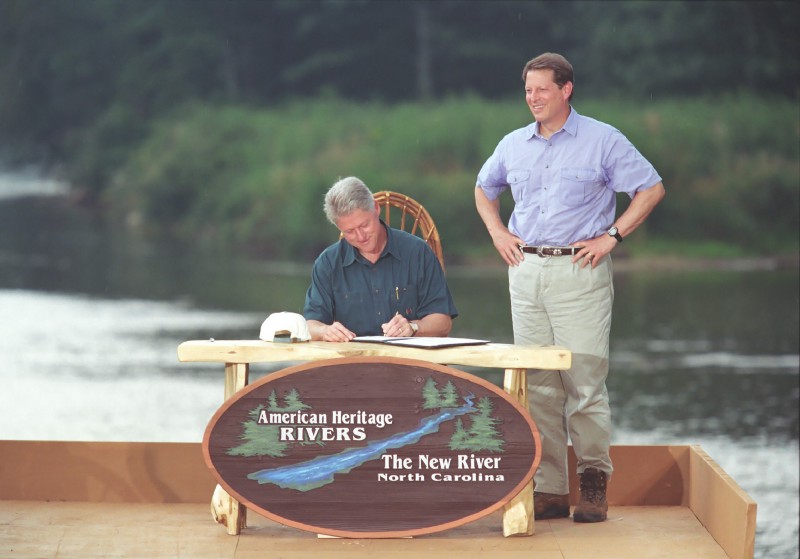
The Clinton administration worked to protect millions of acres in national parks, national monuments, and wilderness areas — from the preservation of national forests to the protection of Yellowstone National Park, from the designation of 14 American Heritage Rivers to the protection of an 84 million-acre coral reef system in the Northwest Hawaiian Island and the widespread wetland restoration effort in the Florida Everglades.
By the end of his presidency, President Clinton had designated 19 national monuments, protected more than 50 million acres of roadless areas in forests around the country, and announced a $1 billion conservation initiative to preserve America’s public lands.
3. Together with Congress, enacted laws to protect our food and drinking water.
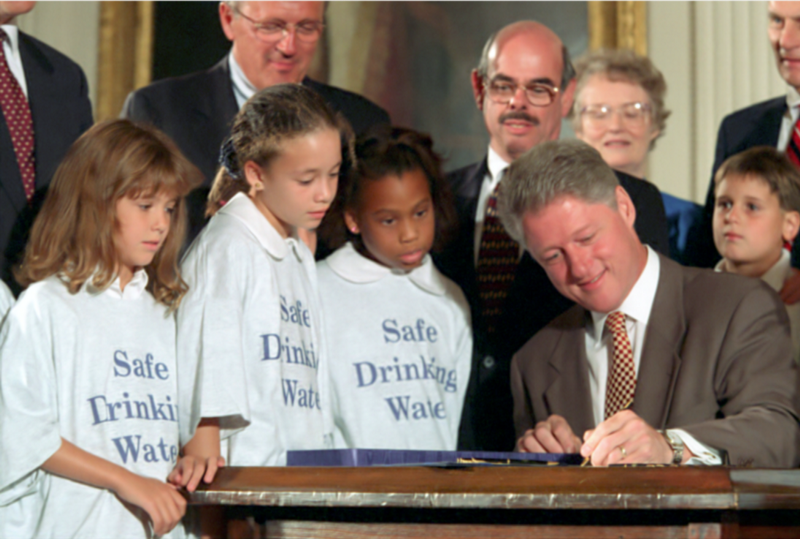
President Clinton knew that children stood on the front lines of the imminent climate crisis and that the EPA had a responsibility to the future of the nation. That’s why President Clinton proposed and Congress passed new laws to protect food and drinking water that embodied that commitment to children’s health. To improve environmental and public health, especially for children, Congress unanimously passed a bill that replaced outdated pesticide residue standards with a single, health-based standard for all food. Standards for drinking water were also enforced so that water was safe for the most vulnerable populations, with the focus on children.
4. President Clinton committed to cleaning up the toxic waste in 600 sites across the country.
In his first State of the Union address, President Clinton called for a reform of the Superfund program, the toxic waste cleanup program. By considering the long-term security of sites post-cleanup and forcing polluters to pay to restore contaminated sites, he helped make the program faster, fairer, and more efficient.
By the end of his second term, over 600 site cleanups were completed, compared to fewer than 150 sites in the previous 12 years of the program.
5. The Clinton administration prioritized “environmental justice.”
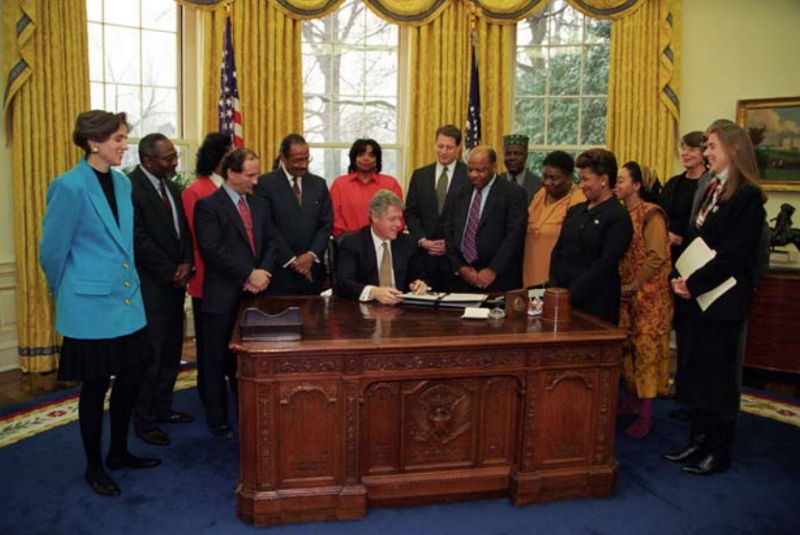
President Clinton issued an executive order that served as the first major federal action on environmental justice and required that federal agencies prioritize the issue by addressing disproportionately high and adverse health or environmental effects of their programs and policies on minority populations and low-income populations.
This executive order brought attention to environmental justice as a movement and the fundamental principle that marginalized communities bear a disproportionate burden of health effects from environmental pollution. This legislation inspired a wave of regulatory policies by states requiring agencies to adopt practices so that all communities had equal protection from the mounting effects of climate change.
6. Eliminated 50 million tons of dangerous air pollutants.
In 1997, President Clinton established the toughest public health air quality standards in history, using authority granted in the Clean Air Act to strengthen standards for smog and set the first-ever standard for soot. When political opponents argued that the administration needed to take costs into consideration, they sued. The case went all the way to the Supreme Court, which upheld the standards in a 9–0 decision.
As a result of these new standards, the administration helped remove soot from diesel fuels and cleaned up toxic emissions from tailpipes and smokestacks — eliminating more than 50 million tons of dangerous air pollutants.
The Work Continues
From the beginning of the initial design, President Clinton wanted his Presidential Center to be a project demonstrating green building design, construction, and operation. The William J. Clinton Presidential Library has been designated as one of the most energy-efficient and environmentally friendly places to work in the United States by the U.S. Green Buildings Council.
Building on President Clinton’s commitment to the environment, the Clinton Climate Initiative, an initiative of the Clinton Foundation, develops scalable projects that can be tailored to local conditions while also serving as innovative models for tackling global climate change. Learn more about our work in Forbes.
While the fight to protect our planet is far from over, progress isn’t possible without action. As President Clinton says, “Everybody deserves a chance. Everybody has a responsible role to play. We all do better when we help each other.”